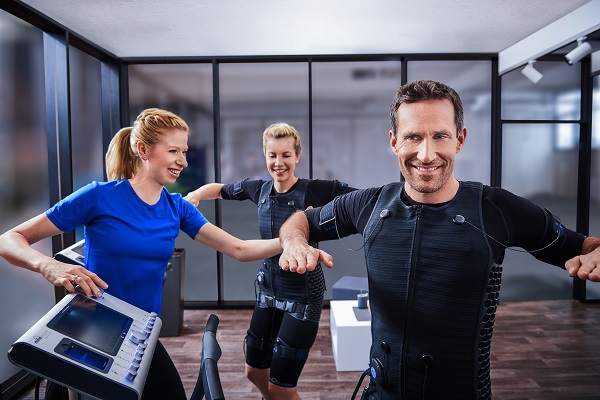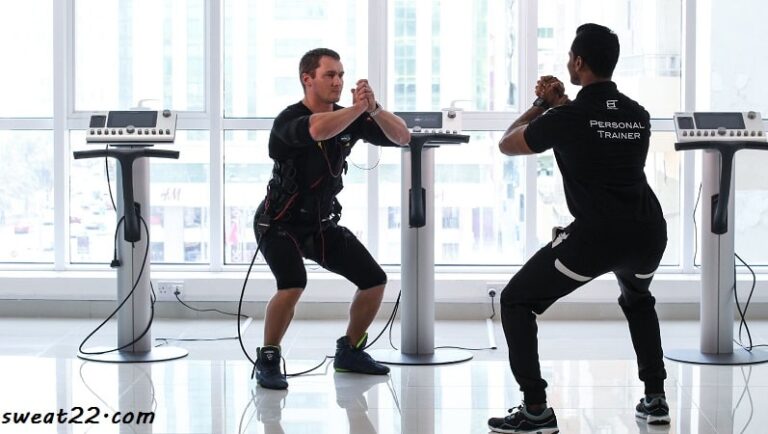
Electro muscle stimulation Training (EMS Training) is a highly time efficient method for improving physical fitness, performance and health. Current research compares the effects of EMS favorably with High Intensity Training (HIT), a highly intensive training method for improving muscles strength.
Guidelines for safe and effective EMS In general:
Preparing for training At Sweat22 Fitness Studio
- As with any kind of intensive training, EMS training must only be carried out in a good physical condition and free of pain. This includes abstaining from alcohol, drugs, stimulants/muscle relaxants or stress ahead of the training session. Training must never be carried out by anybody suffering from an illness with fever.
- EMS training leads to a very high metabolic stress of the organism because of very high volume of muscle- mass addressed. This factor has to be taken into account through sufficient food intake that is as high in carbohydrates as possible. If this is not possible, then at least a high carbohydrate, but light snack (≈250 kcal) should be eaten, ideally about 2 hours before training. At Sweat22 Fitness Studio, our qualified trainers make sure to inform their clients about their daily meals and nutrition plans.
- So as to avoid possible renal stress (especially with undiagnosed problems) through intensive EMS, additional fluids should be consumed before/during and after training (500 ml each).
- Generally, medical (ideally sport-medicinal consultation) and clarification is advisable in the case of any discomfort, physical restrictions, infections or other internal, cardiological or orthopedic illnesses.
Training at Sweat22 Fitness Studio
- Regardless of physical status, sport experience under no circumstances will EMS training be used to exhaustion or take place during the first training session or trial training.
- After moderate initial EMS introduction training, the stimulation level or frequency level will be successively increased and adapted to the individual goals. The highest level to be reached only after 8-10 weeks of systematic training at the earliest.
- In addition, the initial training is conducted with a reduced effective training period. It is advisable to have 5 min of impulse familiarization and a curtailed training session with moderate stimulus intensity (trainee’s subjective effort impression: a bit hard) and 12 min intermittent load with short impulse phase (≈). Only then will the training duration be cautiously increased and never exceed 20 minutes.
- To ensure sufficient conditioning and to minimize or rule out possible health impairments, training frequency will not exceed one to two training unit per week.
- Even after this conditioning phase, an interval 48 to 72 hours is maintained between training units in order to avoid accumulation of muscle breakdown products, permit regeneration and adaptation and thus ensure a successful training outcome.
1. During the training session, the certified trainer will concentrate exclusively on the interests of the trainee. Before, during and after training the trainer verbally and visually checks the trainee’s condition so as to rule out health risks and ensure effective training. Training is to be stopped immediately if there are any contraindications or physical discomfort (i.e., pain).
2. During training, the equipment‘s operating controls is directly in reach of the trainer and the trainee at all times. Operation/adjustment is safe, simple, quick and precise.